

In the competitive wellness industry, creating a distinctive spa identity is key to attracting and retaining clients. While visual aesthetics and interior design are often prioritized, scent branding—the strategic use of aromas—plays a powerful role in shaping client perception and memory.
This guide explores how scent branding can enhance spa ambiance, reinforce brand identity, and craft memorable experiences that clients will associate with your spa.
Understanding Scent Branding
Scent branding involves integrating signature aromas into a business environment to influence emotions and perceptions:
- Emotional impact: Scents can evoke calmness, energy, or nostalgia.
- Brand differentiation: A unique fragrance can set your spa apart from competitors.
- Memory association: Clients often remember experiences through smell, creating lasting impressions.
By consciously selecting fragrances, spas can create an identity that resonates on an emotional level.
The Psychological Effects of Scent
Aromas directly impact mood, behavior, and even perception of quality:
- Relaxation and stress reduction: Lavender, chamomile, and sandalwood promote calm and reduce anxiety.
- Energy and alertness: Citrus, peppermint, or eucalyptus can invigorate and refresh.
- Perceived cleanliness: Light, fresh scents enhance clients’ sense of hygiene and professionalism.
Understanding scent psychology allows spa owners to choose fragrances that align with their desired atmosphere and brand values.
Creating a Signature Spa Scent
A signature scent helps clients associate a specific aroma with your spa:
- Blend carefully: Combine essential oils or fragrance notes to create a unique aroma.
- Consistency: Use the scent across all areas—reception, treatment rooms, and relaxation zones.
- Brand alignment: Ensure the aroma reflects your spa’s theme, whether it’s luxury, holistic wellness, or energizing.
Consistency strengthens brand identity and reinforces client recognition and loyalty.
Scent Placement and Diffusion Strategies
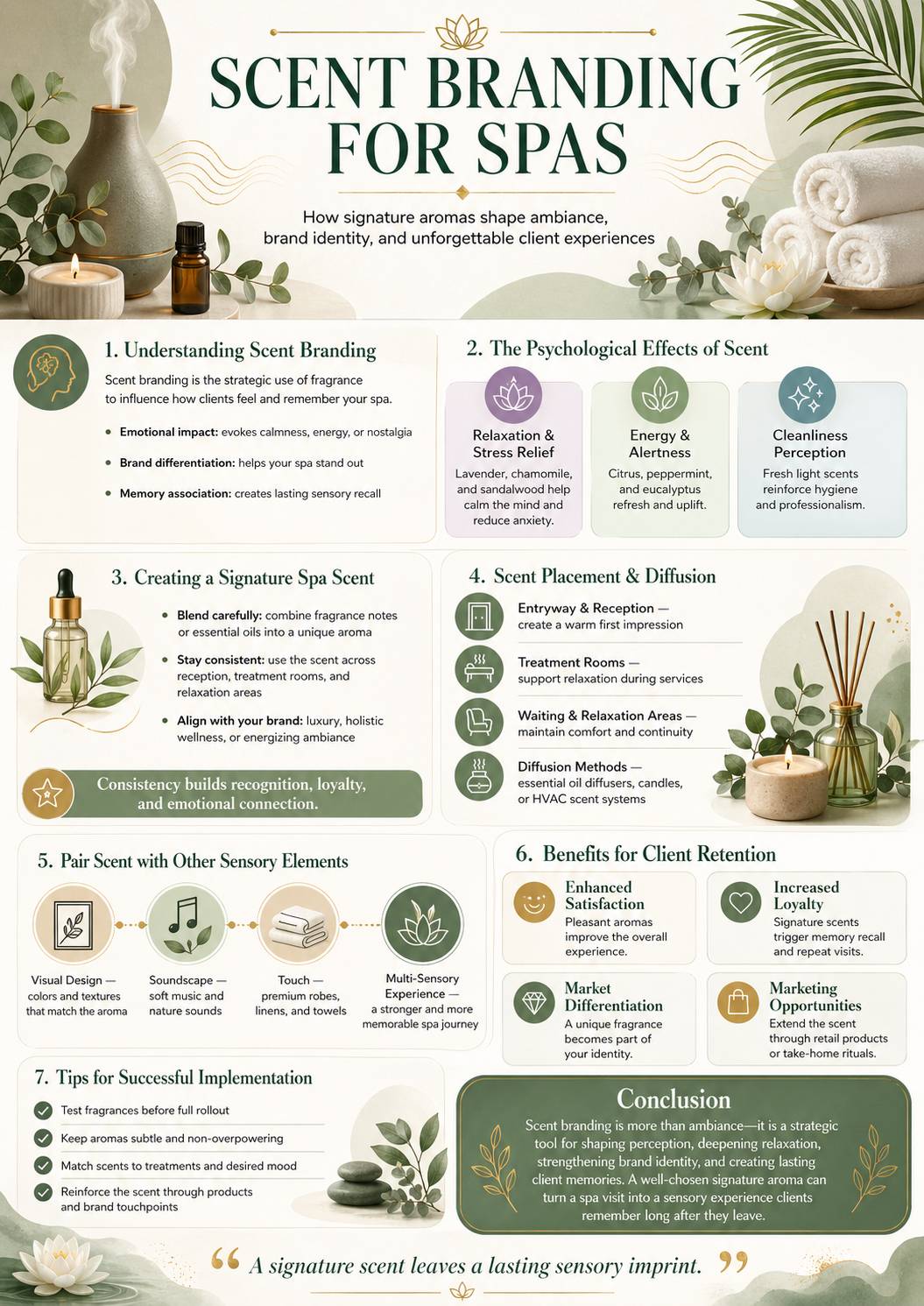
Strategic scent placement ensures the aroma enhances the client experience without being overpowering:
- Entryway and reception: Introduce the signature scent to create an immediate, welcoming impression.
- Treatment rooms: Subtle fragrances can enhance relaxation during massages or facials.
- Waiting and relaxation areas: Maintain gentle ambient scent for continuity and comfort.
- Diffusion methods: Use essential oil diffusers, scented candles, or HVAC-integrated scent systems.
Proper placement creates a cohesive sensory journey throughout the spa.
Combining Scent with Other Sensory Elements
Scent works best when integrated with other aspects of spa design:
- Visual design: Colors and textures that complement the aroma reinforce brand identity.
- Soundscape: Soft music and natural sounds enhance the calming effect of fragrances.
- Touch: High-quality linens, robes, and towels enhance tactile comfort alongside scent.
A multi-sensory approach strengthens the overall experience and leaves a lasting impression.
Benefits of Scent Branding for Client Retention
Scent branding can have tangible business benefits:
- Enhanced client satisfaction: Pleasant aromas improve overall spa experience.
- Increased loyalty: Signature scents trigger memory recall, encouraging repeat visits.
- Differentiation in the market: Unique scents can become a recognizable aspect of your spa’s identity.
- Marketing opportunities: Aromas can be associated with spa products or take-home treatments, extending brand influence.
Investing in scent branding enhances both emotional connection and commercial value.
Tips for Implementing Scent Branding Successfully
- Test fragrances: Conduct small trials to gauge client reactions before full implementation.
- Keep it subtle: Overpowering scents can be off-putting or trigger allergies.
- Align with treatments: Match aromas to the type of service—calming for massages, energizing for facials.
- Maintain consistency: Use the scent in marketing materials or take-home products to reinforce brand identity.
Thoughtful implementation ensures that scent branding supports, rather than overwhelms, the client experience.
Conclusion
Scent branding is a powerful tool in crafting a memorable spa atmosphere and reinforcing brand identity. By strategically choosing and consistently implementing signature aromas, spas can influence client emotions, enhance relaxation, and create an experience that clients remember long after their visit.
Incorporating scent into your spa design is more than an aesthetic choice—it’s a strategic investment in client satisfaction, loyalty, and brand recognition that leaves a lasting sensory imprint.