
In the global wellness industry, few dates on the calendar carry the same weight as February 14th. For spa owners and directors, Valentine’s Day is not merely a celebration of love; it is a critical stress test of operational capacity, a massive opportunity for revenue generation, and a pivotal moment for customer acquisition.
The "Couple’s Economy" is robust, with consumers willing to pay a significant premium for experiences that promise connection, intimacy, and relaxation. However, the difference between a good Valentine’s month and a record-breaking one lies in the sophistication of the offering. It is not enough to simply put a heart icon next to a standard massage on your menu. To truly capitalize on this period, a spa must curate a portfolio of products and services that cater to every demographic—from the deeply romantic to the fiercely independent—while optimizing yield management and operational flow.
At Nuad Spa Consulting, we have analyzed data across hundreds of luxury properties and independent wellness centers to identify the offerings that drive the highest margins and retention rates. What follows is a detailed strategic breakdown of the ten most effective revenue drivers for the Valentine’s season. These are not just services; they are psychological touchpoints designed to meet the heightened emotional expectations of your clientele. We will explore how to structure, price, and market these offerings to ensure your spa maximizes its potential during this high-stakes window.
The Foundation of the Campaign: The Signature Couple’s Ritual
The absolute cornerstone of any Valentine’s Day strategy must be an elevated, signature couple’s experience. While a standard side-by-side massage is the expected baseline, it is rarely the driver of exceptional profit margins. The most successful spas transform this commodity into a "ritual" that commands a higher price point by extending the duration and depth of the experience without necessarily increasing the therapist’s active labor time proportionally.
Consider the psychology of the couple booking this service. They are seeking a shared narrative, a moment of pause in their busy lives where they can reconnect. Therefore, the "best" thing to sell is not just the massage, but the transition into relaxation. A high-performing ritual might begin with a thirty-minute private foot soak or a guided breathing session before the therapists even enter the room. This adds billable time to the suite while allowing the couple to decompress, ensuring that when the hands-on treatment begins, they are already in a state of receptivity. By framing this as a "Connection Ritual" rather than a "60-Minute Massage," you shift the value proposition from a service to a memory. The pricing elasticity for such an experience is significantly higher than standard treatments because the client is paying for the exclusivity of the time and space shared with their partner, rather than just the technical skill of the therapist.
The Premium of Privacy: Monetizing the VIP Suite
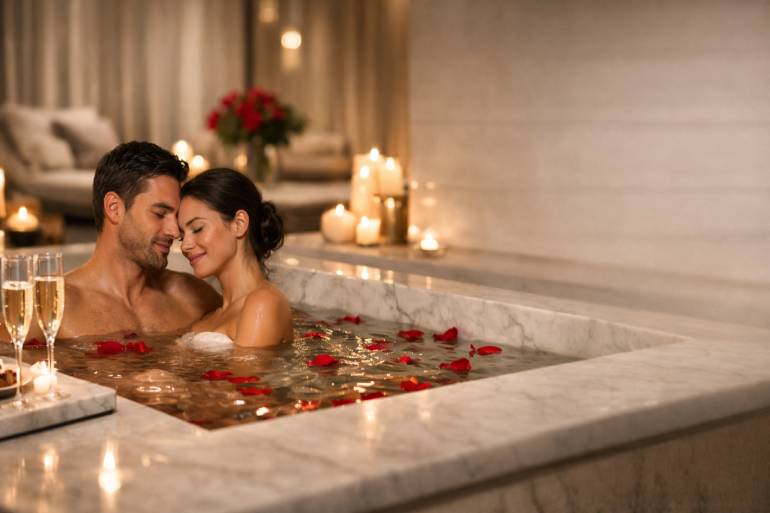
Closely linked to the ritual is the physical environment in which it takes place. If your facility possesses a VIP suite, a private jacuzzi, or even a room with a superior view, Valentine’s Day is the moment to aggressively monetize this asset. One of the most lucrative "products" you can sell is simply privacy. The second essential offering in your Valentine’s arsenal is the upgrade to exclusive facility access.
This strategy involves blocking out your premier treatment room and selling it as a destination in itself. Instead of booking back-to-back hours, you sell the suite for a half-day or evening block. This "Suite Escape" package resolves a common operational bottleneck: the turnover time between couples. By selling a longer block at a premium rate, you reduce the operational strain of flipping the room while increasing the average ticket size. The allure here is the promise of an unhurried experience. You are selling the luxury of time. Couples are invited to linger after their treatment, perhaps to enjoy a private steam shower or simply to relax in robes without the intrusion of other guests. This offering appeals to the high-net-worth demographic that values seclusion above all else. From a consultancy perspective, we often see that spas undervalue their square footage. On Valentine’s Day, your real estate is your most valuable inventory; pricing a private suite package correctly can generate the revenue of four standard treatments with a fraction of the laundry and administrative overhead.
Sensory Engineering: The High-Margin Add-On
Once the core treatment and the location are secured, the next layer of revenue generation comes from sensory enhancements. The third essential element to promote is a menu of romantic add-ons that enhance the perceived value of the visit while costing very little in terms of raw materials or labor. We refer to this as "Sensory Engineering."
The most classic, yet perennially effective, examples are champagne and artisanal chocolates. However, to stand out, these must be integrated into the service flow rather than handed over as an afterthought. Promoting a "Champagne & Roses" upgrade transforms a standard booking into a celebration. The margins on beverage and food add-ons in a spa setting are notoriously high, often exceeding retail markup standards. Beyond consumables, consider the sensory environment of the room itself. An upgrade that includes a specific, aphrodisiac aromatherapy blend—such as rose, jasmine, or sandalwood—creates a powerful olfactory anchor for the guest. When you market this, you are selling the customization of the atmosphere. You might offer a "Scent of Love" menu where the couple chooses their ambient aroma upon arrival. This small interaction increases their sense of agency and investment in the experience. By bundling these low-cost, high-impact elements into a "Romance Upgrade," you can increase the average ticket value by fifteen to twenty percent with almost zero impact on the therapist’s workload.
The Workshop Model: Educational Intimacy
Moving beyond the passive receipt of a massage, there is a growing market segment that seeks interactive experiences. The fourth top-tier offering to promote is the "Couples Massage Workshop." This concept flips the traditional spa model on its head by turning the therapist into an instructor.
In this session, a lead therapist guides the couple on how to perform simple, safe massage techniques on each other. This is a brilliant strategy for several reasons. First, it diversifies your menu, appealing to clients who might feel restless during a standard silence-filled massage. Second, it positions your spa as an authority on wellness education, reinforcing the expertise of your staff. Third, it builds an emotional bond between the couple and your brand, as they are learning a skill they will use at home. This offering can be scheduled during off-peak hours or in a group setting (if space allows) to maximize revenue per hour. The marketing narrative here is powerful: "Give the gift that lasts forever." You are selling them the ability to care for each other long after they leave your premises. This type of active engagement often leads to higher retail attachment rates, as couples are eager to purchase the specific oil or balm they used during the lesson to replicate the experience at home.
The Retail Extension: Bringing the Spa Home
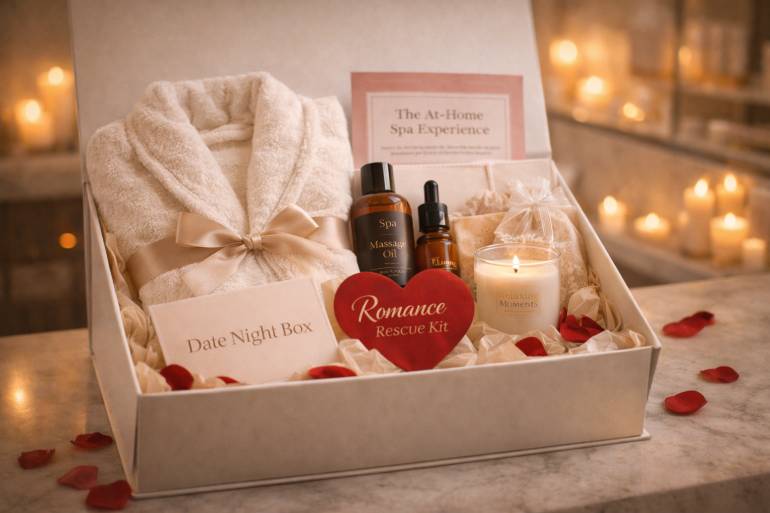
This leads us naturally to the fifth critical revenue stream: the "Home Spa Kit." Many potential customers may not be able to secure a booking on the 14th due to capacity constraints, or they may prefer an intimate evening at home. For this demographic, your retail area must become a destination in itself.
A curated Valentine’s retail box is a product that sells itself if positioned correctly. This should not be a random assortment of leftovers, but a cohesive narrative in a box. It might include the same massage oil used in your signature treatments, a high-quality soy candle, a branded robe, and a guide to setting a relaxing atmosphere. By packaging these items as a "Romance Rescue Kit" or "The Date Night Box," you provide a solution for the partner who wants to give a thoughtful gift but lacks the time to assemble it. The key to selling this is visual merchandising. These kits should be displayed prominently in your reception area and marketed heavily on your digital channels as the perfect solution for "at-home luxury." Furthermore, this strategy captures revenue from walk-in traffic and gift-shoppers who may not even be spa clients themselves, effectively expanding your market reach beyond your treatment rooms.
The Deferred Revenue Engine: The Gift Card Strategy
While immediate service revenue is the goal, the astute spa manager knows that February is also a prime season for securing future cash flow. The sixth and perhaps most financially significant item to promote is the "Future Wellness" Gift Card.
Valentine’s Day is traditionally a gift-giving holiday, and a significant portion of spending comes from individuals buying gifts for partners to use at a later date. However, a generic gift card feels impersonal. The strategy here is to productize the gift card. Instead of selling a "$150 Voucher," sell a "Voucher for the Eternal Love Package." Even if the dollar amount is the same, giving the voucher a specific title and associating it with a specific experience makes it feel like a thoughtful, curated present. To drive volume, you can incentivize the purchaser: "Buy a $200 gift card for your partner, receive a $25 voucher for yourself." This "Gift for Them, Treat for You" promotion is highly effective because it acknowledges the purchaser’s desire for self-care while they are performing an act of generosity. This strategy ensures that your appointment book remains filled in the slower months of March and April, as recipients redeem their gifts, smoothing out the post-holiday dip in utilization.
Inclusivity as Strategy: The Galentine’s Celebration
It is a strategic error to assume that Valentine’s Day is exclusively for romantic couples. The rise of "Galentine’s Day"—celebrated typically on February 13th or surrounding weekends—represents a massive, underserved market of female friendship groups. The seventh offering to prioritize is the "Best Friends Retreat."
Groups of friends often have a higher collective spend than couples because the dynamic is social and celebratory. They are more likely to purchase champagne, add on manicures or pedicures, and buy retail products recommended by their peers. Promoting a package designed for three or four friends allows you to utilize your manicure and pedicure stations or relaxation lounges which might otherwise be underutilized if the focus is solely on massage rooms. This offering should be tonally distinct from your romantic packages; it should be fun, vibrant, and focused on connection and celebration. By creating a specific "Galentine’s" menu, you signal to your single clientele that they are welcome and valued, preventing them from feeling alienated during a couple-centric holiday. This demographic is also highly active on social media, meaning a well-executed group package often generates significant organic marketing reach through user-generated content.
The Solo Narrative: The Self-Love Package
Parallel to the group market is the individual who chooses to practice self-care. The eighth "thing" to sell is the "Radical Self-Love" package. In recent years, the cultural conversation has shifted to embrace self-love as a valid and necessary practice. Your spa is perfectly positioned to champion this narrative.
This package should be designed to pamper the individual extensively, perhaps combining a facial with a body treatment to create a holistic "new you" experience. The marketing copy should focus on restoration, deservingness, and personal sanctuary. "Be Your Own Valentine" is a compelling message that resonates with a wide demographic, from single professionals to busy parents seeking a momentary escape from family obligations. By offering a package that treats the solo guest with the same level of ceremony and luxury usually reserved for couples—perhaps including the glass of champagne and the chocolate usually seen in duo packages—you validate their status and create a deeply loyal customer. This strategy effectively fills single-treatment rooms that might otherwise sit empty if your focus is entirely on double occupancy.
The Beauty Angle: The "Date Ready" Facial
While massage dominates the Valentine’s discussion, there is a specific, high-urgency demand for beauty services leading up to the date itself. The ninth offering to promote is the "Glow and Go" facial series.
Many clients want to look their absolute best for their Valentine’s dinner or weekend getaway. Therefore, promoting results-driven facials in the days leading up to the 14th is a tactical move to capture this demand. Unlike a relaxation massage, this is a solution-oriented purchase. The client is buying confidence. These treatments should be marketed as "Red Carpet Ready" or "Date Night Glow," emphasizing immediate radiance and no downtime. This is an excellent opportunity to partner with your skincare brand reps to create a promotional event or a specific protocol that utilizes brightening masks or oxygen infusions. Additionally, this service acts as a powerful gateway to retail sales. A client who sees immediate results from a facial is highly likely to purchase the serum or moisturizer recommended by the esthetician to maintain that look, thereby increasing the revenue per visit significantly.
The Long Game: Membership Conversion
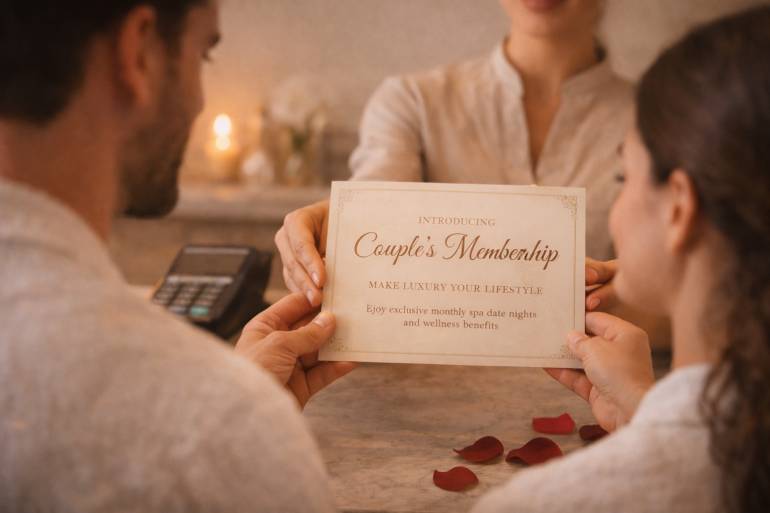
Finally, the tenth and most strategic element to "sell" on Valentine’s Day is not a single service, but a relationship. The influx of new faces during this week provides a unique opportunity for membership conversion.
Every Valentine’s Day package should come with a "bounce-back" offer or an exclusive invitation to join your membership program. You are selling the concept that wellness is not a one-day affair but a lifestyle. For example, if a couple enjoys their signature ritual, the checkout process should include a soft pitch: "If you loved today’s experience, we have a couple’s membership that allows you to make this a monthly date night at a preferred rate." This is the ultimate upsell. By converting a high-emotion, one-time visit into a recurring revenue stream, you maximize the customer lifetime value (CLV) of the Valentine’s traffic. The "product" here is commitment—not just to each other, but to their shared health and well-being. Training your front desk staff to articulate this offer smoothly is essential. It transforms the busiest week of the year from a chaotic spike in revenue into a sustainable foundation for the year’s financial growth.
Integrating the Strategy
Implementing these ten pillars requires a cohesive approach that blends operational readiness with marketing flair. It is insufficient to merely list these items on a website. They must be woven into a compelling narrative that reaches the client through email campaigns, social media storytelling, and in-spa signage.
At Nuad Spa Consulting, we emphasize that the "best" things to sell are those that solve a problem for the client. For the stressed couple, you solve the problem of disconnection. For the busy partner, you solve the gift-giving dilemma. For the single professional, you solve the need for self-care. By aligning your Valentine’s Day offerings with these emotional and logistical needs, you move beyond selling services and start selling solutions.
Furthermore, success lies in the details of execution. Your yield management strategy should be dynamic; as prime slots on the 14th fill up, the pricing for the remaining premium suites should reflect the scarcity. Conversely, the "Galentine’s" and "Self-Love" packages can be used to drive traffic to shoulder dates and off-peak times, ensuring that your facility utilization remains high throughout the entire month of February.
Ultimately, Valentine’s Day is a microcosm of the spa business itself. It requires the delicate balance of genuine hospitality and rigorous business acumen. By focusing on these ten strategic areas—elevated rituals, privacy, sensory add-ons, education, retail, gift cards, group bookings, solo care, beauty results, and membership conversion—you position your spa not just as a place to get a massage, but as an indispensable partner in your clients’ lives. The revenue generated in this short period, if managed correctly, provides the capital and the customer base to fuel your business growth well into the future. This is the Nuad approach: holistic, profitable, and enduring.